ANY WAR
Brécourt Manor: taking the guns
In the dark early hours of 6 June 1944, thousands of American paratroopers dropped over the Cotentin peninsula, many of them scattered miles from where they were meant to land. By morning, a battery of German 105mm howitzers hidden in the hedgerows near the Brécourt Manor farm, outside the village of Sainte-Marie-du-Mont, was shelling the causeways that led inland from Utah Beach. Those narrow roads were the only way off the sand for the troops landing behind them.
First Lieutenant Richard Winters of Easy Company, 2nd Battalion, 506th Parachute Infantry Regiment, 101st Airborne Division, was sent to deal with it. He had about a dozen men. The Germans had several times that number, dug into trenches that ran along the edges of the fields between the guns.
Winters set up his machine guns to pin the defenders down, then sent small teams forward along the hedgerows and into the trenches, clearing them gun by gun. All four guns were put out of action and the battery stopped firing on the beach exits. The attack became a model of how a small unit can beat a larger, dug-in force with fire and movement, and it has been taught to officers at West Point for decades. Winters was awarded the Distinguished Service Cross.
Carentan: storming the crossroads
Carentan was a small market town sitting on the main road between the two American beaches, Utah and Omaha. Until it fell, the two landings could not link up into one front. The approach from the north ran along a raised causeway across flooded marshland, with almost no cover on either side, and the town was held by German paratroopers of Fallschirmjäger Regiment 6.
On 10 and 11 June, men of the 101st Airborne fought their way down the causeway under heavy fire. On 11 June, Lieutenant Colonel Robert Cole led a bayonet charge across open fields at the far end, an action that earned him the Medal of Honor. Attacks closed in from several directions, and on 12 June the paratroopers took the town. The next morning a German counterattack, backed by armour of the 17th SS Panzergrenadier Division, came close to breaking through before tanks of the US 2nd Armored Division arrived and drove it back.
Carentan joined the beachheads into a single front. The fighting for its streets, gardens and crossroads was close and confused, and was won house by house.
What you command
In both Normandy battles you lead the Americans on the attack, on terrain built from the real OpenStreetMap data for each spot.
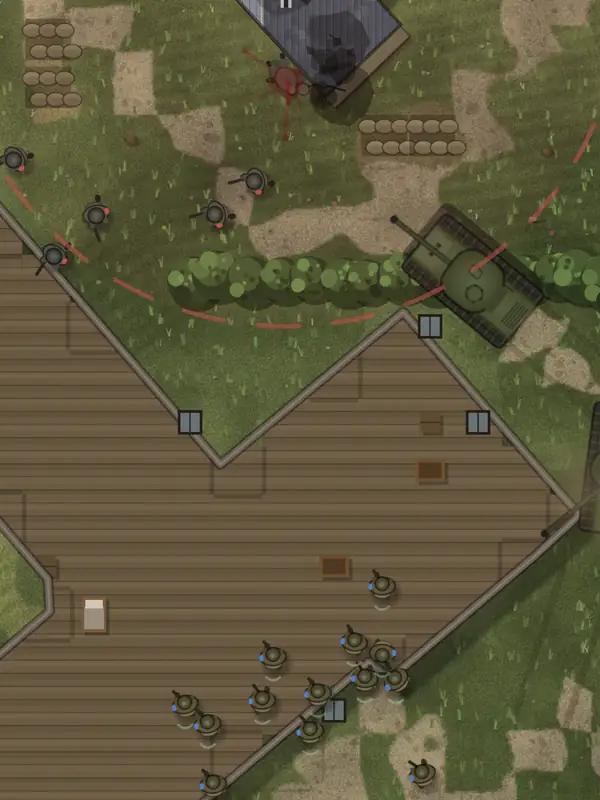
Brécourt Manor is a tight fight for one objective: a small force against a dug-in position, where every hedgerow matters. Carentan gives you a bigger force and two objectives, pushing squads through the town's real streets and gardens.
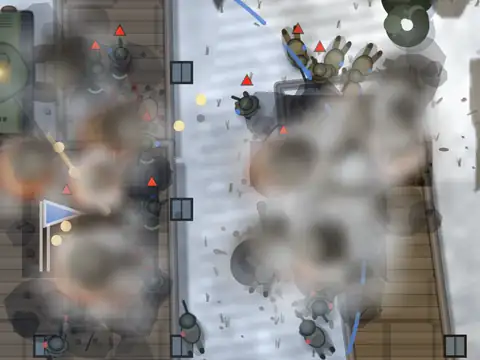
Set up a base of fire to pin the defenders, move riflemen from cover to cover, use smoke to cross open ground, and take the flags. It is the same problem Winters faced: the side that moves without covering fire loses.