ANY WAR
The third day
For the first days of July 1863, the Union Army of the Potomac under George Meade and Robert E. Lee's Army of Northern Virginia fought around the crossroads town of Gettysburg, Pennsylvania. By the third day the Union army held a strong line along Cemetery Ridge, south of the town. Lee had attacked both ends of it. Now he decided to strike the center.
The bombardment and the charge
At about one o'clock on the afternoon of 3 July, more than 150 Confederate cannon opened fire on the ridge, the largest bombardment of the war. Union guns answered across the valley. When the firing slackened, roughly 12,500 Confederate infantry from the divisions of George Pickett, J. Johnston Pettigrew and Isaac Trimble stepped out of the trees on Seminary Ridge and marched across nearly a mile of open farmland, in long lines, toward the Union position.
Union artillery tore into them as they came: shell at long range, then canister at close range. Infantry lying behind a low stone wall rose and fired volley after volley. Where that wall turned a sharp corner, the spot known ever since as The Angle, Brigadier General Lewis Armistead led a few hundred men over the wall with his hat on the point of his sword, before he fell mortally wounded. Union regiments rushed in from both sides and sealed the breach.
The high-water mark
Within an hour it was over. More than half of the men who made the charge were killed, wounded or captured. On 4 July Lee began his retreat to Virginia, and he never again invaded the North. The place where Armistead crossed the wall is often called the high-water mark of the Confederacy.
What you command
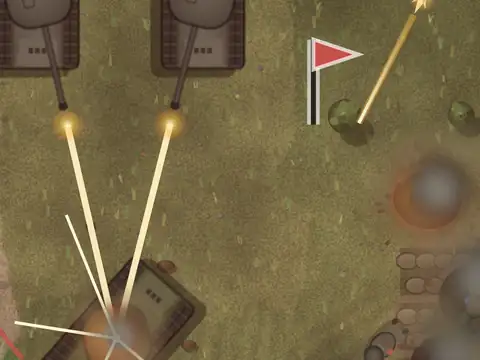
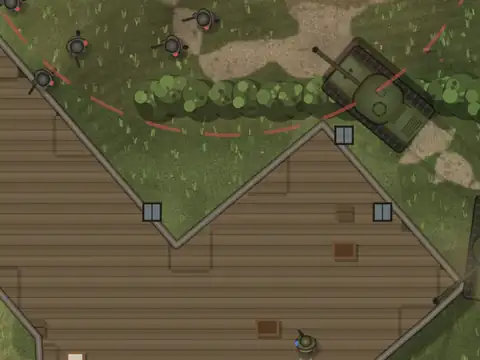
You hold the Union line at The Angle. Your infantry starts behind prepared defences along the wall, and your batteries outnumber the enemy's, as they did on the day, because the attackers brought few guns forward with them.
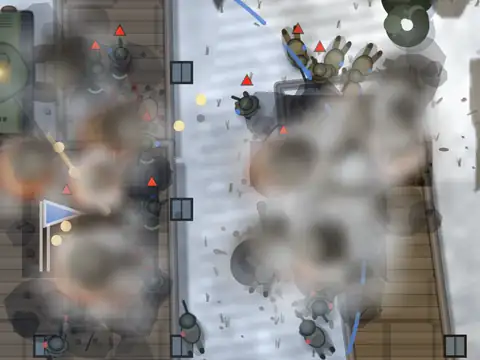
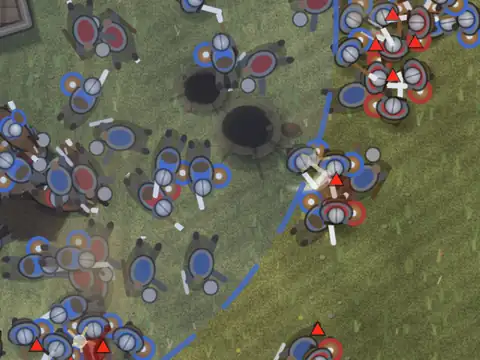
The Confederate lines come at you across open ground. Keep your guns firing, hold your volleys behind the wall, plug any gap before it widens, and keep the flag.